UniBarge and VSTEP are extending their partnership with two new NAUTIS Inland Simulators for the UniBarge Academy. They are the world’s first inland maritime simulators featuring a seamless, true-curve direct-view LED (dvLED) cylindrical display.
UniBarge’s inland tank barges carry mineral oils, fuels, chemicals and biofuels across North-West Europe. In 2024, the company founded the UniBarge Academy to train crews and new entrants to inland shipping. The two simulators are the Academy’s next investment in those people, helping all crews who sail for UniBarge go on the water for the first time with confidence.
A new view from the wheelhouse
On a simulator built from flat TV screens, the frames of the TVs cut the outside view into sections. UniBarge’s simulators use a true-curve dvLED display instead. Its LED panels are themselves curved, so the display follows a smooth arc around the simulator, ahead, to the sides, and astern. The view of the waterway wraps around the trainee, free of TV frames.
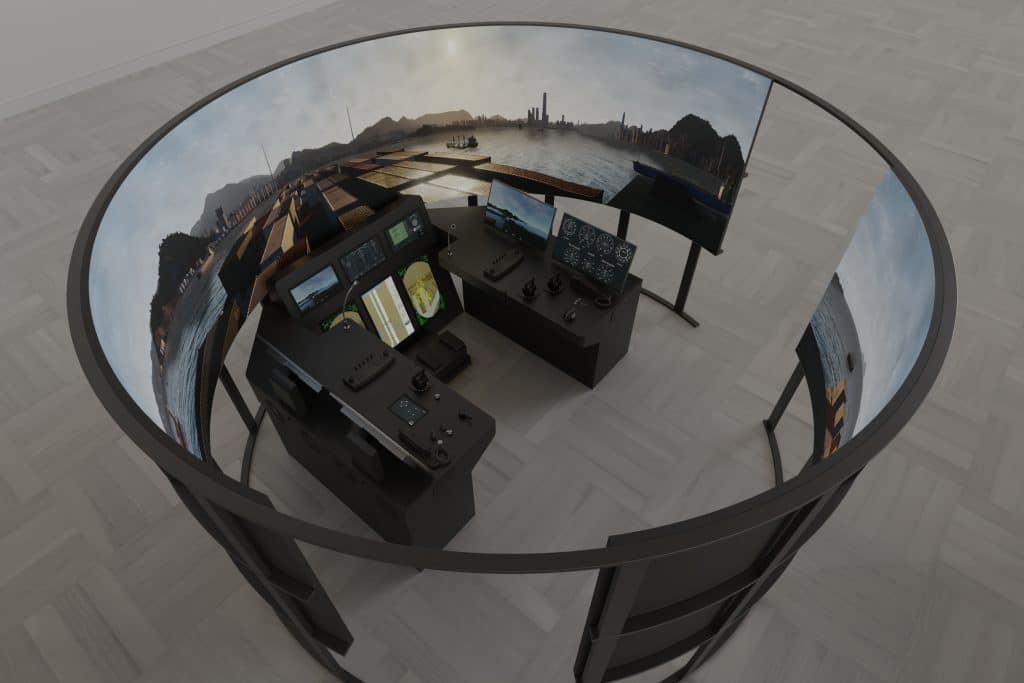
On an inland vessel, much of the judgement happens beside and behind the wheelhouse as well as ahead of it: the stern clearing a lock wall, the distance to the bank, a vessel coming up astern. The cylindrical display keeps those references in view to the sides and astern as well as ahead. In tight spots, that view is what a skipper judges distance and speed by.
William Horstman, QHSSE Manager at UniBarge, explains what this means for the Academy’s students:
“Some situations you do not want a student to meet for the first time on the water, such as a tight lock approach, a bridge passage at high water, or a busy stretch of the Rhine. With the curved LED screens showing the view from our own wheelhouses, our students train these moments in the simulator until they can handle them with confidence.”
Instructors in control
The Academy’s instructors use NAUTIS Instructor to design, run, and review each exercise. They set the current, the traffic, and the visibility. As the exercise unfolds, they can introduce critical situations, such as an equipment failure on a lock approach. In the debrief, they replay the exercise with the trainee and connect each decision to its outcome.
Two crews, one waterway
The two simulators also work together as one training environment.
“Inland waterways are shared, and the most critical moments usually involve another vessel,” says Tije Vos, CCO at VSTEP. “With the two simulators linked, two UniBarge crews can meet on a narrow stretch in restricted visibility, with only radar and the radio to agree how they will pass. Helping crews handle situations like these safely is what drives our innovation, and it will keep shaping how we develop simulation for maritime learning.”
A long-term partnership
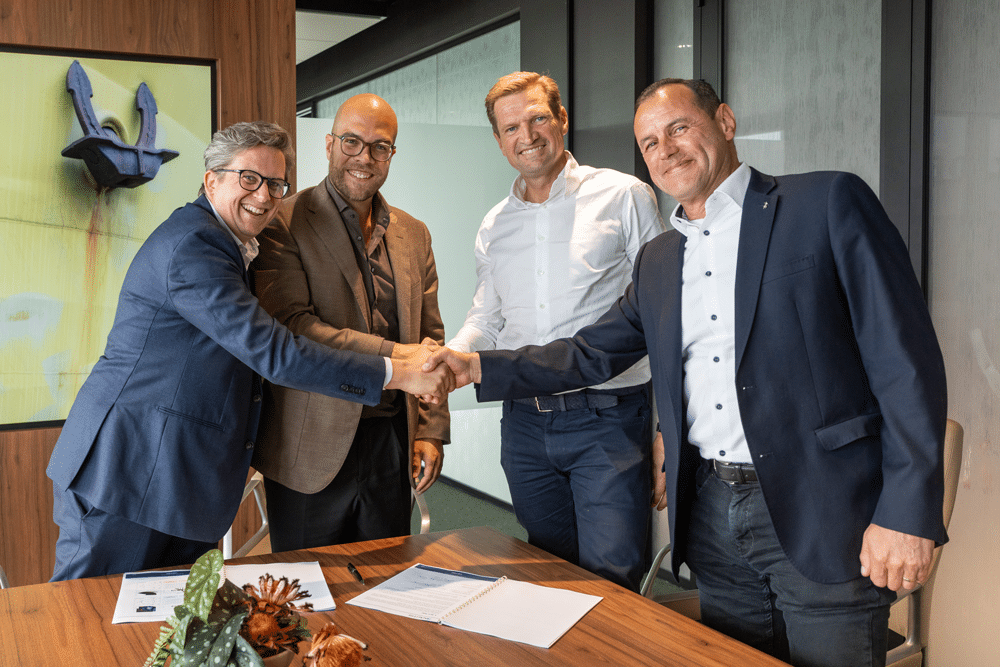
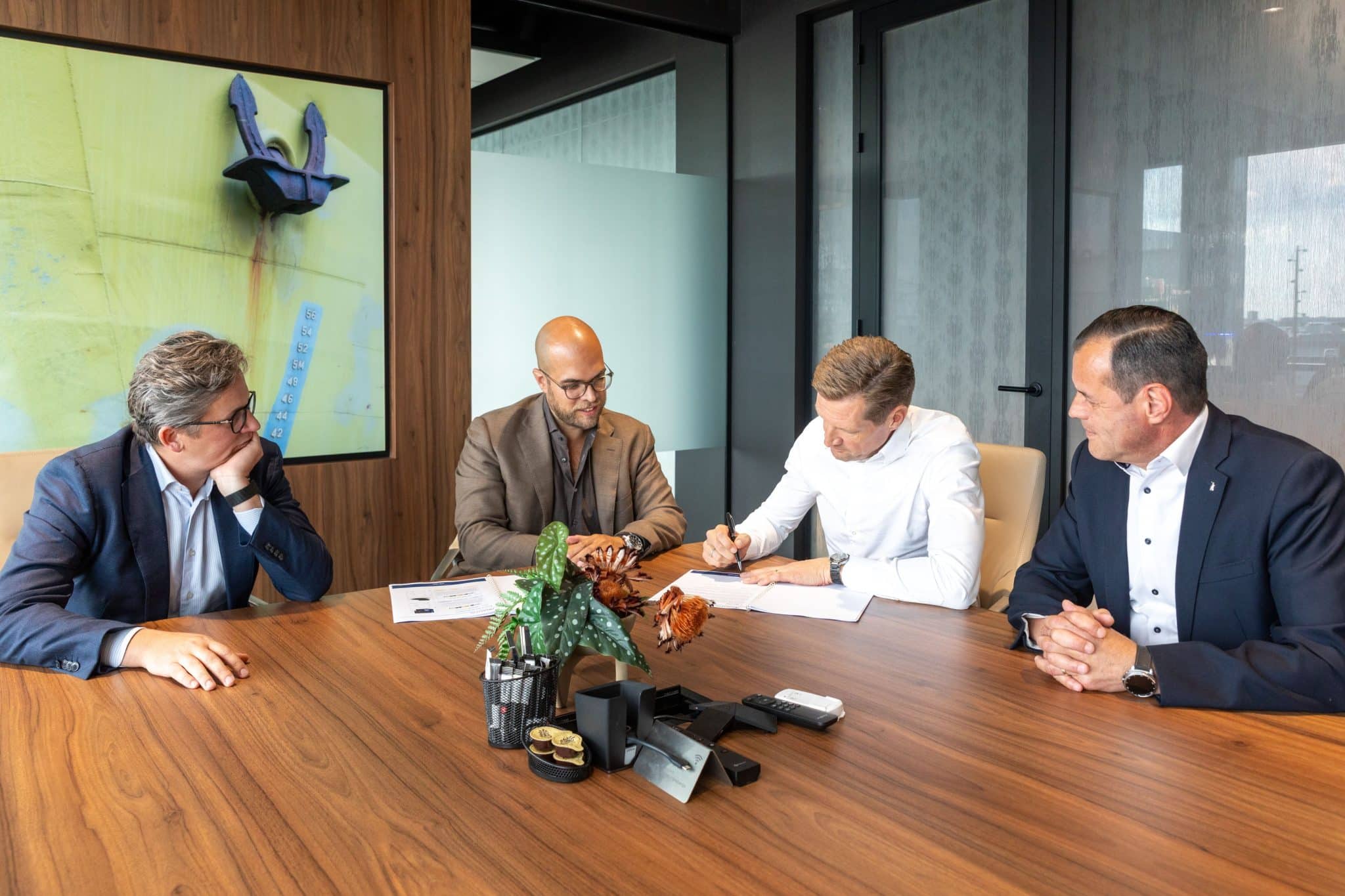
Alexander Wanders, of UniBarge and Tije Vos signed the agreement at UniBarge, with William Horstman and Fabian van den Berg, CEO of VSTEP, joining them for the signing. The agreement also includes five years of support and continuity, as part of a NAUTIS subscription plan. Technical support, maintenance, and software updates keep the simulators available, reliable, and ready for use, and keep them current as the Academy’s training evolves.
(PHOTO: Tije Vos, CCO, VSTEP; Fabian van den Berg, CEO, VSTEP; Alexander Wanders, Owner, UniBarge; William Horstman, QHSSE Manager, UniBarge.)