

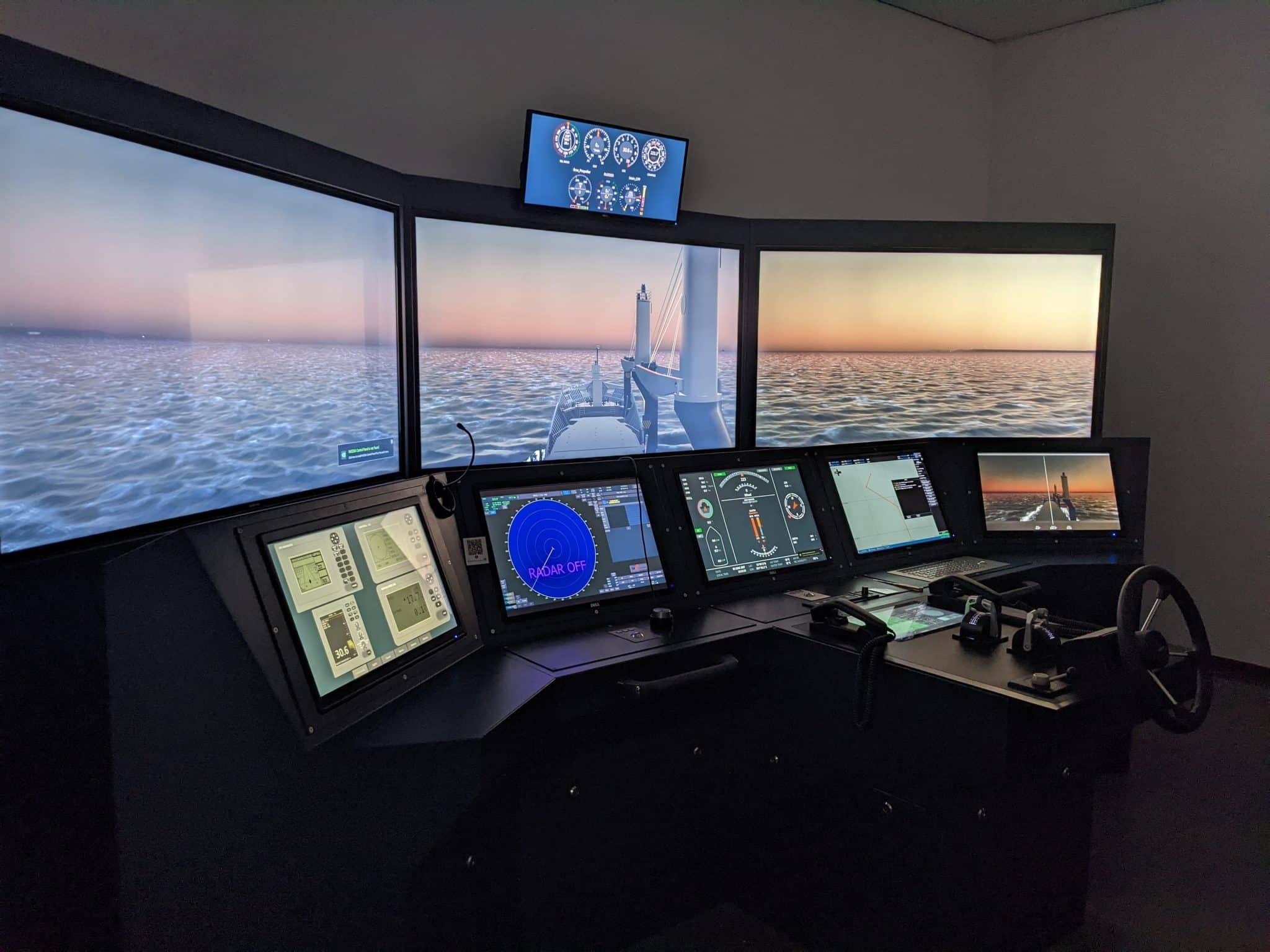
The maritime sector is undergoing a fundamental transformation. Rising fuel costs and stricter emissions standards have shifted sustainability from a policy item to an operational necessity. In this landscape, maritime simulation serves as a strategic tool f-or budgeting and regulatory alignment.
For maritime academies and fleet operators, the priority is clear: every decision at sea affects fuel consumption. By integrating efficiency at the training stage, organizations secure sustainable performance before a vessel ever leaves the berth. This approach transforms global mandates like IMO 2030 and 2050 from a financial burden into an opportunity for higher operational performance.
Simulation as a Foundation for Fuel Efficiency
Fuel is one of the most significant controllable expenses in maritime operations, typically constituting 30 to 60% of total expenses for container vessels. While market volatility remains external, vessel handling is entirely manageable. Small gains in efficiency deliver substantial financial and environmental benefits at the fleet level.
Ship simulator software acts as a laboratory for maritime operations, allowing for the precise testing of variables that are difficult to isolate at sea. By creating a controlled, repeatable environment, crews can experiment with different routes and maneuvering strategies to identify the most efficient approach without the operational risks of live trials. This data-driven feedback loop turns theoretical efficiency gains into documentable performance improvements.
NAUTIS simulators leverage these core maritime simulation principles to help navigators determine optimal speed-to-consumption ratios across diverse weather conditions and current strengths. Research on fuel consumption prediction models confirms that accurate modeling is essential for operational optimization. By using these high-fidelity tools, crews can refine their ship handling skills in a setting that mirrors real-world hydrodynamics, ensuring that the most efficient strategies are ingrained before the vessel departs.
The following table illustrates how simulation enhances the operational measures recommended by the Ship Energy Efficiency Management Plan (SEEMP):
| SEEMP Operational Measure | Simulation Impact | Financial Benefit |
|---|---|---|
| Voyage Planning & Route Optimization | Testing fuel-efficient paths against current and weather variables. | Reduced bunker consumption per voyage. |
| Speed Optimization (Slow Steaming) | Identifying the precise “sweet spot” for fuel consumption per vessel type. | Significant reduction in high-cost fuel burn. |
| Maneuvering & Ship Handling | Reducing erratic engine loading through improved handling competence. | Lower maintenance costs and extended engine life. |
| Just-in-Time Port Arrival | Coordinating arrival maneuvers to minimize idling and surging. | Avoidance of port congestion surcharges and idling waste. |
1. Voyage Planning and Route Optimization
Efficient voyage planning relies on testing fuel-efficient paths against current and weather variables. Within a simulated environment, crews can experiment with different routes for oceans, inland waterways, and complex port entry and exit. This data-driven feedback loop ensures that the most cost-effective paths are selected, directly reducing bunker costs while maintaining operational safety.
2. Speed Optimization and the “Sweet Spot”
Identifying the precise speed for fuel efficiency per vessel type is critical for maintaining a high Carbon Intensity Indicator (CII) rating. Using a professional Shipping simulator, navigators can find the “sweet spot” where fuel burn is minimized without compromising schedule reliability. This precision training helps crews understand the non-linear relationship between speed and consumption, reducing high-cost fuel burn.
3. Maneuvering and Ship Handling Competence
Erratic engine loading often stems from inconsistent ship handling. By refining these skills through Maritime simulation, crews learn to maintain steady propulsion and optimize rudder use, which lowers maintenance costs and extends engine life. Focusing on smooth maneuvers ensures that ship handling becomes a core competency that protects hardware investment and improves energy efficiency.
4. Just-in-Time Port Arrival
Coordinating arrival maneuvers to minimize idling and surging is a high-impact strategy. Simulation allows crews to practice precision timing and speed management for port entry and exit, avoiding port congestion surcharges and unnecessary idling waste. These refined skills translate directly into operational savings and improved transparency in port-side operations.
Regulatory Alignment and the Financial Value of Compliance
The IMO maintains strict frameworks such as the Energy Efficiency Existing Ship Index (EEXI) and the Carbon Intensity Indicator (CII). Details on these classifications are available in the IMO EEXI and CII FAQ. Maintaining a high CII rating has direct financial consequences; vessels with low scores face reduced market value and operational restrictions.
By utilizing a professional shipping simulator, fleet managers can perform documentable exercises that align with IMO energy efficiency mandates. Refining operational tactics in a simulator allows organizations to meet transparency and reporting standards. This proactive compliance prevents costs from penalties or expensive technical adjustments that can be avoided through optimized vessel handling.
Competence Building for Sustainable Performance
Sustainability starts with training. To achieve long-term environmental goals, eco-friendly practices must be treated as a core competency. Competence building through simulation allows both cadets and experienced professionals to refine their approach and revisit familiar routes to find new efficiencies.
High-fidelity simulators make it possible to identify specific areas for operational improvement. For example, a navigator may discover that an adjusted heading during port entry, accounting for tidal currents, reduces the need for sudden power changes. These lessons become standard procedure at sea through targeted simulation exercises.
The human factor is critical in fuel management. By focusing on training, organizations empower their crews to manage emissions effectively. This shift toward proactive human skill is a cost-effective way to strengthen the sustainability profile of a fleet.
Continuity and Operational Readiness
Sustainable performance requires constant attention. Maritime simulation provides a platform for repeatable missions where professionals can test strategies for hybrid or alternative fuel systems. These technologies often require specific handling that differs from traditional propulsion.
By integrating best practices into training, academies prepare the next generation of seafarers for a low-emission reality. This operational readiness ensures that transitions to new fuels remain smooth and financially viable. The ability to monitor and refine within a digital environment accelerates innovation while keeping training costs manageable.
Conclusion
In summary, maritime simulation is an essential contributor to sustainable operations. By reducing reliance on live training and allowing crews to reach the limits of their ability in a safe learning environment, simulation technology lowers costs and strengthens regulatory compliance. It is a strategic investment in both the sector and the financial future of the organization.
Discover how VSTEP’s NAUTIS simulators can enhance your organization’s fuel efficiency and operational readiness. Our solutions are designed to align with the latest maritime regulations while protecting your budget.
Explore the NAUTIS simulator platform or contact our team to learn more about our simulations
Frequently Asked Questions
Is simulation as effective as live training for fuel management?
In many cases, it is more effective for efficiency training. Simulation allows instructors to repeat specific high-consumption maneuvers and compare data instantly. It removes the safety risks of testing efficiency limits on actual vessels while eliminating the fuel costs of the training session itself.
Can simulation be used to refine the skills of experienced professionals for better efficiency?
Yes. Sustainable performance is an ongoing process of refinement. Simulation provides a platform for experienced captains and navigators to test new maneuvering strategies and revisit complex routes, such as port entries and inland navigation, to identify further opportunities for fuel savings and efficiency improvements.
Is simulation-based training applicable to all types of navigation, including port maneuvers?
Simulation is effective across all operational phases, including the open ocean, inland waterways, and the critical stages of port entry and exit. Training in these diverse environments ensures that crews can maintain high efficiency standards regardless of the complexity of the navigation task.


