

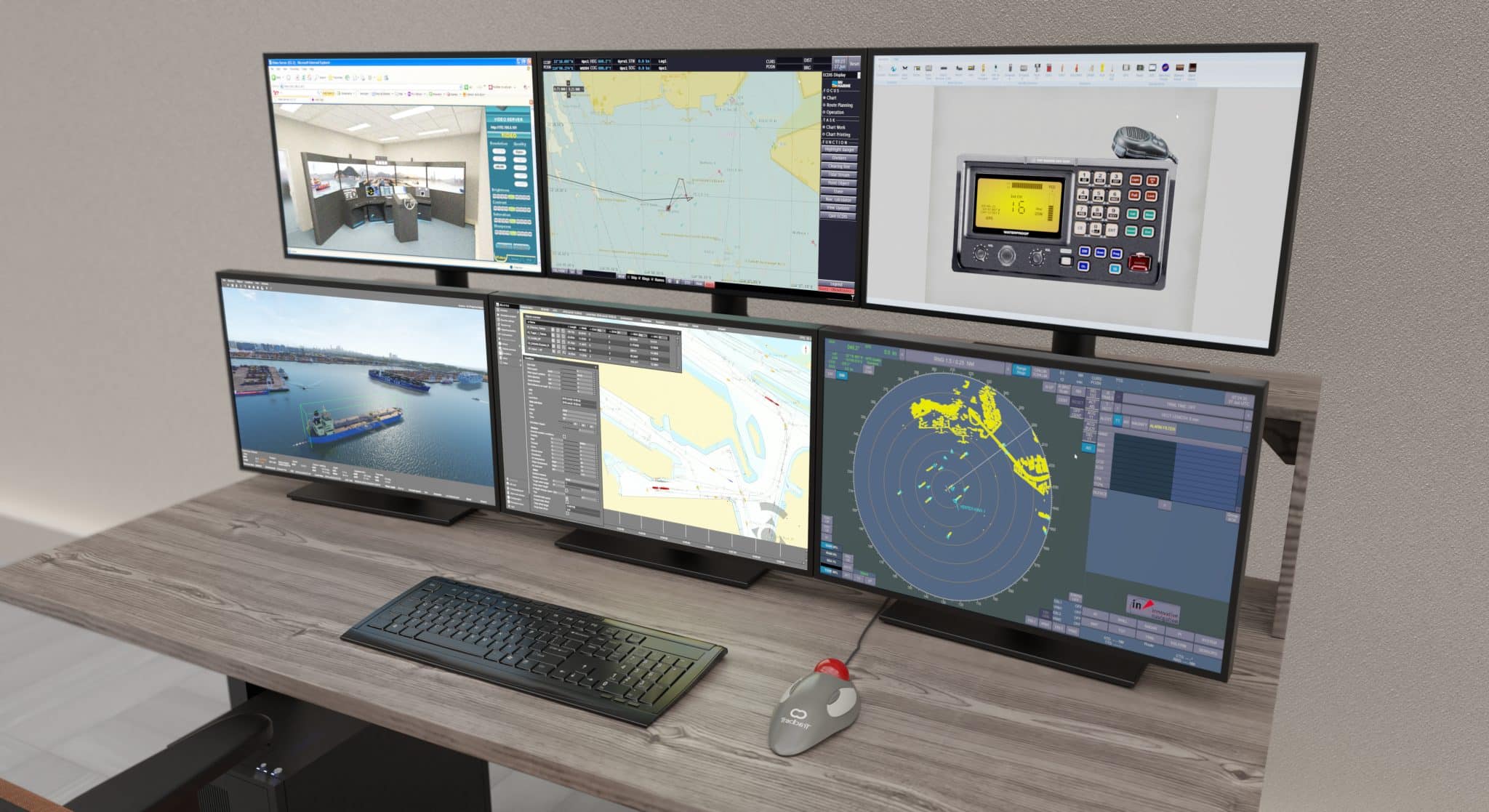
Maritime simulation is at its strongest when advanced technology stays close to the realities of teaching. Realism gives training its foundation, while instructor-focused design helps learning happen in the room. This is the thinking behind VSTEP’s Less Clicks, More Teaching objective for NAUTIS Instructor.
Maritime simulation has become a cornerstone of professional seafarer development. As the demands of maritime operations grow, simulation-based training has moved from being a supplementary tool to an essential part of its infrastructure. Across academies, training centers, fleet operators, ports, navies, and coast guards, simulation-based learning gives trainees the opportunity to practice in realistic, repeatable, and safe environments before applying those skills in real operations. (IMO Model Courses)
But as simulation technology has matured, an important question has come into focus. Who is it actually designed for?
At VSTEP, we design simulations around teaching outcomes. Technology that cannot be used fluidly in a live teaching environment, no matter how technically advanced it is, does not fully serve the people it was built for.
This perspective sits behind a principle that guides our NAUTIS Instructor: Less Clicks, More Teaching. The intention is straightforward, reduce the operational workload on instructors so they can focus on what they are there to do. But that principle is not contained to one product or one interface. It is an expression of something more foundational about how simulation technology, in our view, should be built and measured.
The gap that feature-led development leaves open
Simulator development has traditionally been driven by technical ambition, and there has been remarkable progress in realism and accuracy. But there is a distinction worth drawing. A simulator that models a vessel accurately is not automatically a simulator that supports teaching effectively.
Most simulator development conversations centre around technical depth, hydrodynamics, propulsion modelling, environmental conditions, and radar accuracy. It’s not to say that these do not matter; they do. A training system that does not reflect how a vessel behaves cannot deliver the realism that professional maritime education demands. But technical depth alone does not determine whether a simulator is effective in a teaching environment.
Many systems have been built with significant capability that becomes difficult to deploy in practice, because the instructor interface has not received the same design attention as the underlying simulation engine. The result is a common friction: instructors entering live sessions with trainees who must divide their attention between managing software and managing learning.
Several common UI (User Interface) design issues can disrupt training sessions especially when speed and timing are critical.
- A UI that exposes the full complexity of the system at once, even when only a small part is needed for the current teaching moment.
- Instructors need to juggle different controls all while also guiding the exercise.
- Multiple steps required to trigger one action that should be an immediate change.
These interruptions accumulate over time, causing teaching moments to pass, trainee mistakes to go unaddressed, and planned interventions to happen too late.
What a teaching moment requires
Teaching in a simulation environment is not passive. An instructor running an exercise is simultaneously monitoring trainee behaviour, reading the evolving scenario, deciding when to intervene, adjusting the level of difficulty, and preparing for the debrief. These are the moments that determine whether learning happens and require the system to support that.
The goal VSTEP has set is to give instructors the space to direct cognitive energy to the teaching process by ensuring that functionality is available without demanding system management in return (Sibbald,Caners,Wang). This is what the NAUTIS Instructor is built around. The design objective is to ensure that the tools instructors need most are accessible without friction so that instructors can direct their time and cognitive energy toward the teaching process, not the teaching tool. The aim is for them to have less clicks, more teaching.
Rather than presenting the full weight of the system’s capability on a single interface, it organises instructor controls around the natural phases of a training session. Instructors can monitor exercises, introduce failures and emergencies in real time, and guide scenarios through a clear exercise timeline.
Over time, that pattern affects not just individual sessions but the consistency of teaching quality across a programme.
Conclusion
The future of maritime simulation will not be determined by technical depth alone. The simulators that make the most meaningful contribution to maritime competence will be those that help instructors teach.
This is what drives the Fewer Clicks, Better Teaching objective at VSTEP. When technology is built around teaching outcomes rather than feature lists, the result is simulation that works in the room, not just in a specification document.
Frequently asked questions
What is people-centred maritime simulation?
People-centred maritime simulation designs the training environment around how maritime professionals actually learn and perform. It goes beyond visual realism to support decision-making, situational awareness, and procedural consistency. Operational realism, guided practice, instructor oversight, and structured debrief work together to turn simulator time into genuine competence development.
Why is simulation-based learning more effective than live operations alone for maritime training?
Live operations rarely allow repeated practice, controlled variation, or the space to pause and examine a decision. Simulation creates that space. It lets maritime professionals practise complex and high-consequence scenarios in a controlled environment, review what happened, and build the fluency and judgement that operational readiness requires.
What domains and vessel types does NAUTIS support?
NAUTIS covers a wide range of maritime domains including ocean navigation, inland waterways, towage, dynamic positioning, vessel traffic services, fishing, fast craft, and remote operations. The modular ecosystem allows organisations to start with the capability they need and expand the simulator portfolio as their training requirements grow.
How does NAUTIS Instructor support the learning process?
NAUTIS Instructor gives instructors clear tools to design, run, monitor, and debrief exercises across the simulator portfolio. It supports scenario set-up, live exercise control, observation, replay, and targeted debrief. The goal is to reduce administrative overhead so instructors can focus on teaching, coaching, and competence development.


