

MIIP Feasibility Project
Maritime operations are becoming more varied and complex, and that is increasing the demand for high quality simulation training scenarios. At the same time, creating and maintaining those scenarios through expert effort alone becomes harder to scale. To address this, VSTEP initiated an Maritieme Innovatie Impuls Projecten (MIIP) funded feasibility project to explore how training content can be developed, delivered, and shared more efficiently through a pilot. As part of the research, the project also examined how VSTEP’s existing tools could enable more scenario automation. The pilot itself focused on one practical topic, helping participants learn how to operate a vessel in the most fuel-efficient way to reduce costs and support lower emissions.
This contributes to MIIP’s mission to support the maritime business sector in developing new knowledge and/or products by validating a scenario-based learning concept and prototype. VSTEP led the project and provided simulation expertise, working closely with Maritieme Academie Harlingen (MAH). MAH delivered and evaluated the pilot at their institution and contributed maritime education as well as subject matter expertise.
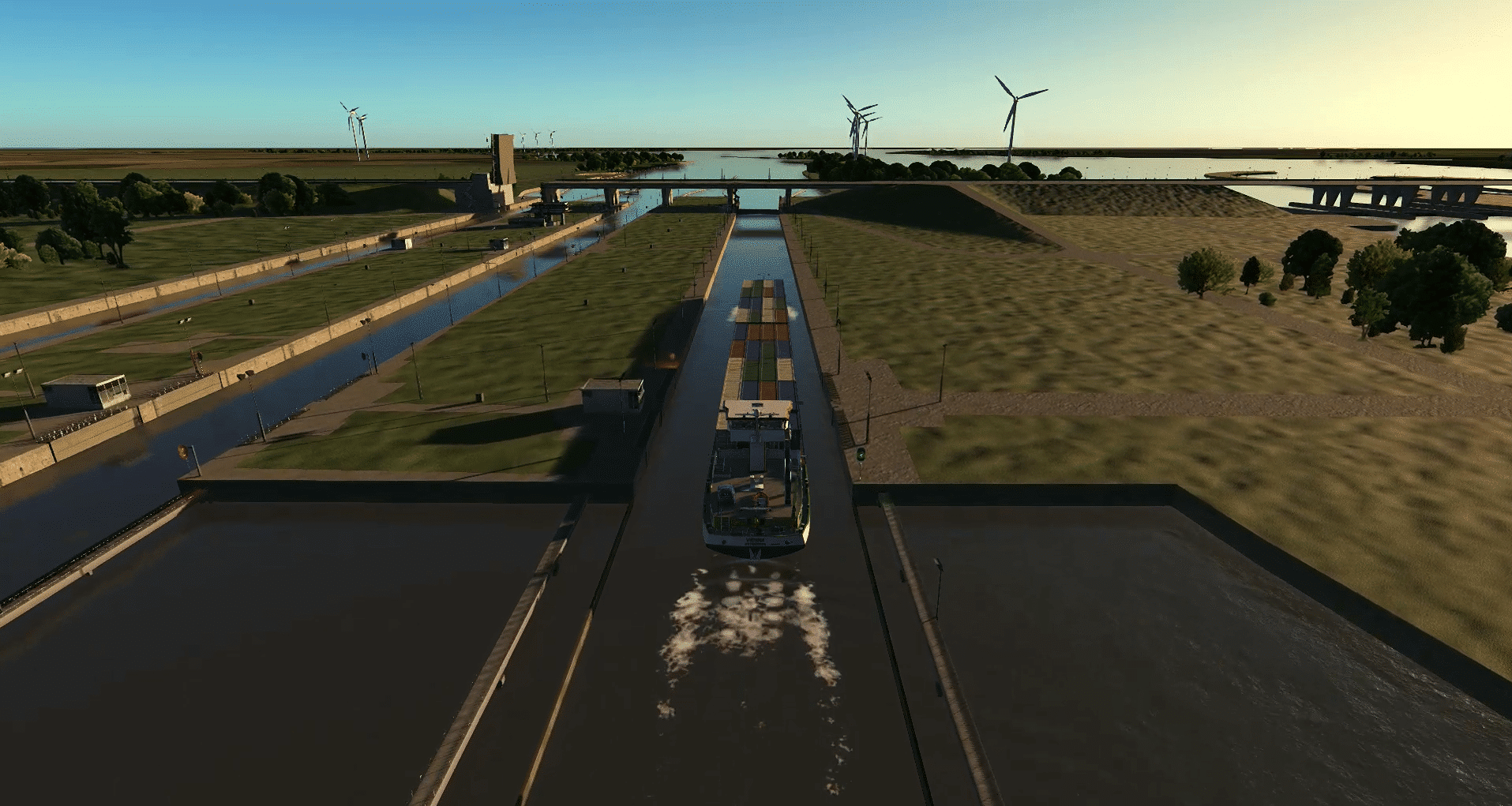
Efficient sailing training in the bridge simulator
For this pilot, the topic “efficient sailing” was selected as it lends itself well to short scenarios which provide a direct comparison of performance before and after training.
Participants first sailed the route without any explanation or tips, so that the baseline performance reflected their existing habits and decision-making.
After reaching the destination, trainees received the results of the scenario. They saw their fuel consumption and the associated fuel costs. After, they received an explanation with practical tips on how to reduce fuel consumption against the same route and conditions.
Participants then sail exactly the same route a second time. The data from the second session is compared directly with the data from the first, with the intention that the acquired knowledge translates into different improved performance and less fuel wasted.
The scenario was created in NAUTIS using a route across part of the Hollands Diep with the Volkeraksluis as the final destination.
Results and what this enables
The pilot, while being a training concept, is also an illustration of what becomes possible when maritime scenarios are made accessible in a structured way. The results showed that the concept works. The tangible outcome of the feasibility project is a prototype that supports scenario-based learning through a platform.
While the pilot focused on efficient sailing, it also illustrates what becomes possible when maritime scenarios are made accessible in a structured and repeatable way. In this case, the training was directly linked to reducing unnecessary fuel use. Over time, a platform that supports this type of scenario-based learning can help accelerate adoption of more efficient operational practices, while maintaining the realism and quality that maritime training requires for both trainees and experienced professionals.
Scope and next development phase
The next phase of development is to realize the platform, which is then expected to evolve by innovating the technological prospects of teaching in maritime simulation. The direction is toward a VSTEP platform that enables broader access to high quality training content.
This project was made possible in part by NML and the Ministry of Economic Affairs. It reflects the collaborative innovation the maritime sector increasingly needs. VSTEP remains committed to advancing maritime learning through practical and technically grounded innovation that supports safe, efficient, and sustainable operations.


