

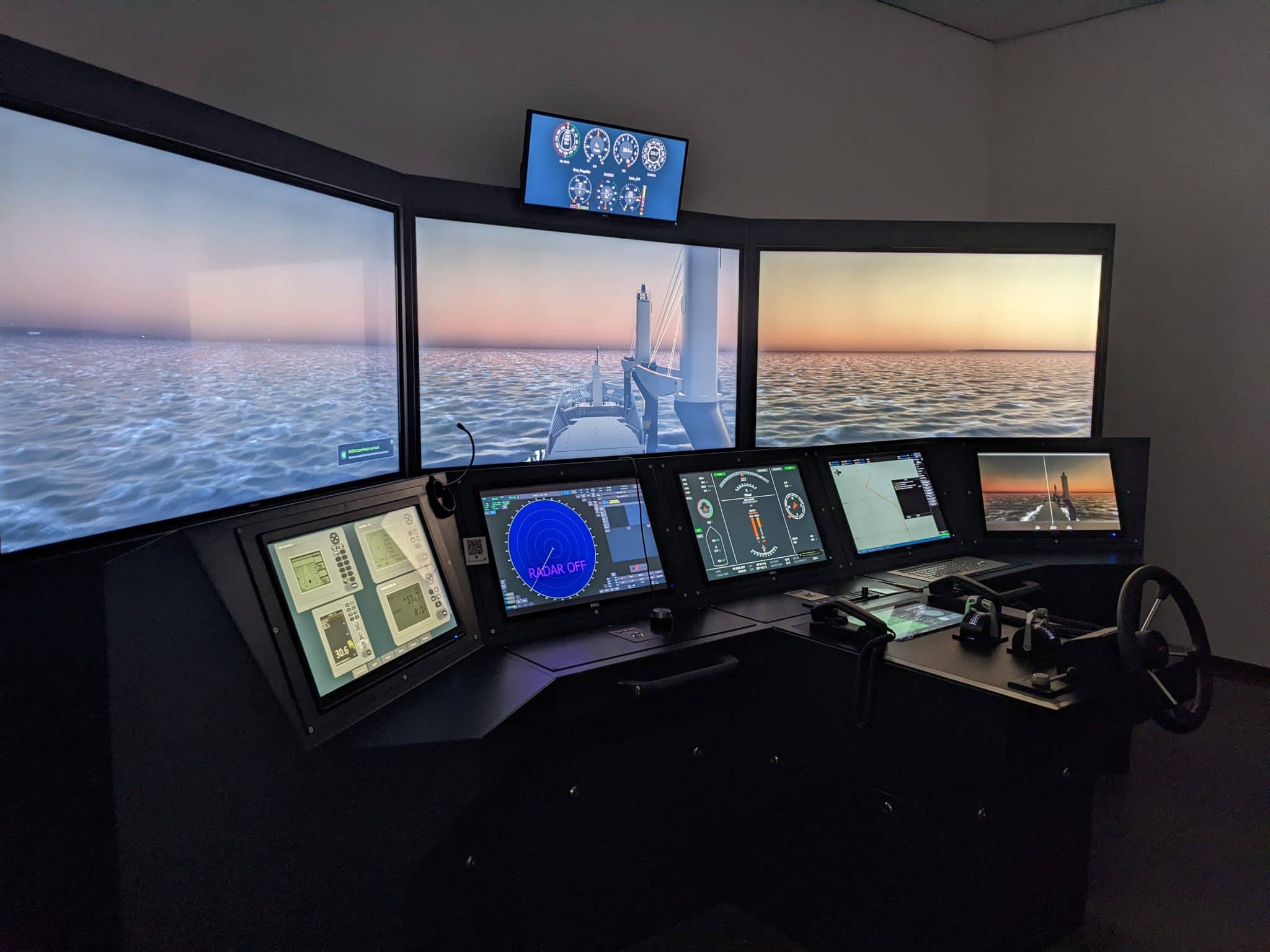
When real-world navigation gets complex, no amount of textbook knowledge is enough. What matters most is how crews respond to the unexpected: ECDIS malfunctions, dense traffic approaches, port congestion, or poor visibility. A bridge simulator offers the safest, most effective way to prepare for these critical moments before they happen at sea.
In this blog, we explore how bridge simulator training bridges the gap between theory and real-life operations, and how instructors and trainees can use it to build real competence, not just compliance.
What matters most in simulation: Insights from the field
In a recent LinkedIn poll we ran at VSTEP, we asked maritime professionals what matters most to them when it comes to hydrodynamics in maritime simulators. The top answers were interaction effects (46%) and handling & seakeeping (43%). These results reflect what we often hear from instructors and training coordinators in the field: it’s not just about visuals or ease of use, but about how the vessel realistically reacts to external forces nearby ships, shallow water, or wind and current. Those complex interaction effects are critical for building real-world skills and decision-making ability.
This feedback aligns with what bridge simulator training delivers when used effectively: real-world conditions, detailed ship behaviour, and immersive scenario design.
You can view the LinkedIn poll here
What you can (and should) train with a bridge simulator
A high-fidelity bridge simulator recreates real-world environments with radar, ECDIS, conning displays, and realistic ship handling physics. It allows maritime trainees to practise:
- ECDIS and radar malfunctions: learning to transition to backup navigation modes and maintain situational awareness.
- Traffic separation zones: training for overtaking, crossing, and approaching under high workload.
- Port approaches in limited visibility: decision-making with restricted sight and tight margins.
- Bridge team communication: applying closed-loop communication protocols in tense scenarios.
- Unexpected pilot transfer complications: knowing what to do when boarding procedures don’t go as planned.
Each of these scenarios reflects real challenges seafarers face, and each one benefits from repetition, instructor feedback, and graduated difficulty.
”Instructors use the NAUTIS Bridge Simulator to expose cadets to pressure they’ll only face at sea. It’s not about learning buttons, it’s about shaping reflexes and teamwork.
Tije VosChief Commercial Officer - VSTEP
The instructor’s role: from scenario to skills
Training impact hinges on instructional design. With the NAUTIS Instructor Station 2.0, instructors have a powerful hardware-software system to design and control exercises. They can simulate real-world ports, vessel types, and even previous near-miss incidents. The station provides full control over environmental conditions, equipment failures, vessel traffic, and performance metrics, all from a single intuitive interface.
After each session, trainees receive feedback through built-in debriefing tools. Instructors can assess not just task completion but response quality, timing, communication, and decision logic. This elevates training from task-based to truly performance-based.
Why it matters for operational readiness
Bridge simulator training goes far beyond regulatory compliance. It enables structured skill progression, prepares for low-probability/high-impact events, and fosters confidence in new officers. For experienced crew, it provides a space to refine strategies and recalibrate judgement without risk.
As more vessels integrate automation, crews must learn not just how systems work, but how to handle them when they don’t. Maritime simulation is the best way to embed this kind of resilience and support operational readiness.
Why NAUTIS is the bridge simulator of choice
The NAUTIS Bridge Simulator is designed for professional training centres that demand flexibility, realism, and compliance. With validated vessel hydrodynamics, modular simulator layouts (from desktop to full mission), and tools aligned with DNV Certification. NAUTIS offers:
- Flexible scenario-building tools combined with an extensive library of port, river, and offshore environments
- Multi-user bridge team training
- Seamless integration with instructor feedback tools
- Proven use cases in inland, commercial, and naval training environments
To learn more, read our blog What is a Bridge Simulator? or explore our Portable Simulation Solutions for flexible deployment options.
Comparing systems rather than scenarios? Our bridge simulator overview sets out the NAUTIS configurations side by side.
Ready to start preparing for the unexpected?


